

· Vitorra Admin
The VW T5 field test: what a 13.9% fuel reduction does and does not tell you
An independent engineering firm measured a working Volkswagen van before and after Fuel Eco Tech was fitted. Here is what was measured, how to read it, and why we still test on your own vehicles.
When a product claims to save fuel, the first question should be: measured by whom, on what, and for how long? This article sets out the evidence behind Fuel Eco Tech (FET) plainly, including what it cannot prove.
The test in brief
| Detail | |
|---|---|
| Vehicle | Volkswagen T5 van in daily public-sector service |
| Operator | Landesbaubehörde Stadthagen, Hannover region, Germany |
| Period covered | January to October 2025 |
| Assessed by | CTI GmbH, Lippstadt, Germany |
| Report signed | 10 November 2025 |
The van was not a laboratory car. It was a working vehicle doing its normal job, with its fuel use logged before and after the device was fitted.
What was measured
- Before FET: an average of 11.52 litres per 100 km, recorded over 13,468 km of normal use.
- With FET: 9.92 litres per 100 km in the first full month after fitting.
- Difference: 1.6 litres less for every 100 km, a 13.9% reduction.
The report compares that against the normal month-to-month variation in a vehicle's fuel use, which it puts at around 3 to 5%. A change of 13.9% sits well outside that band, which is why the assessors treated it as a real effect rather than noise.
What it means in money
Using the van's own numbers as an example: at 20,000 km a year, 1.6 litres saved per 100 km is 320 litres a year. Multiply that by your own pump price to see the value. For a heavier vehicle that burns more fuel per kilometre, the same percentage is worth considerably more, which is why fleets and trucks see the shortest payback.
Our savings calculator does this sum with your vehicle, your distance and your fuel price. It starts at a 0% saving on purpose, so you can see what the purchase looks like if it saves nothing.
What the test does not tell you
We think buyers should hear this from us:
- It is one vehicle. A single van's result is evidence, not a guarantee for every engine.
- The "after" period is one month. A longer period would show whether the saving holds through seasons and service intervals.
- German conditions are not Ugandan conditions. Road surfaces, loads, fuel quality, traffic and driving styles all differ.
- Results vary by vehicle. Engine type, age, condition and how the vehicle is driven all affect the outcome.
None of this makes the result less real. It means the right next step is to measure on your vehicles.
How we apply it in Uganda
That is why we do not ask anyone to buy on the strength of one report:
- Assessment. We look at your vehicles, routes and fuel records, and confirm which of the four device sizes fits each one, at no cost.
- A measured trial. We fit a small number of vehicles and compare their fuel use against their own history, route by route, on terms agreed in writing first.
- Your decision. You see the result in a report, including if the saving is small or none, before we discuss the rest of the fleet.
About the device
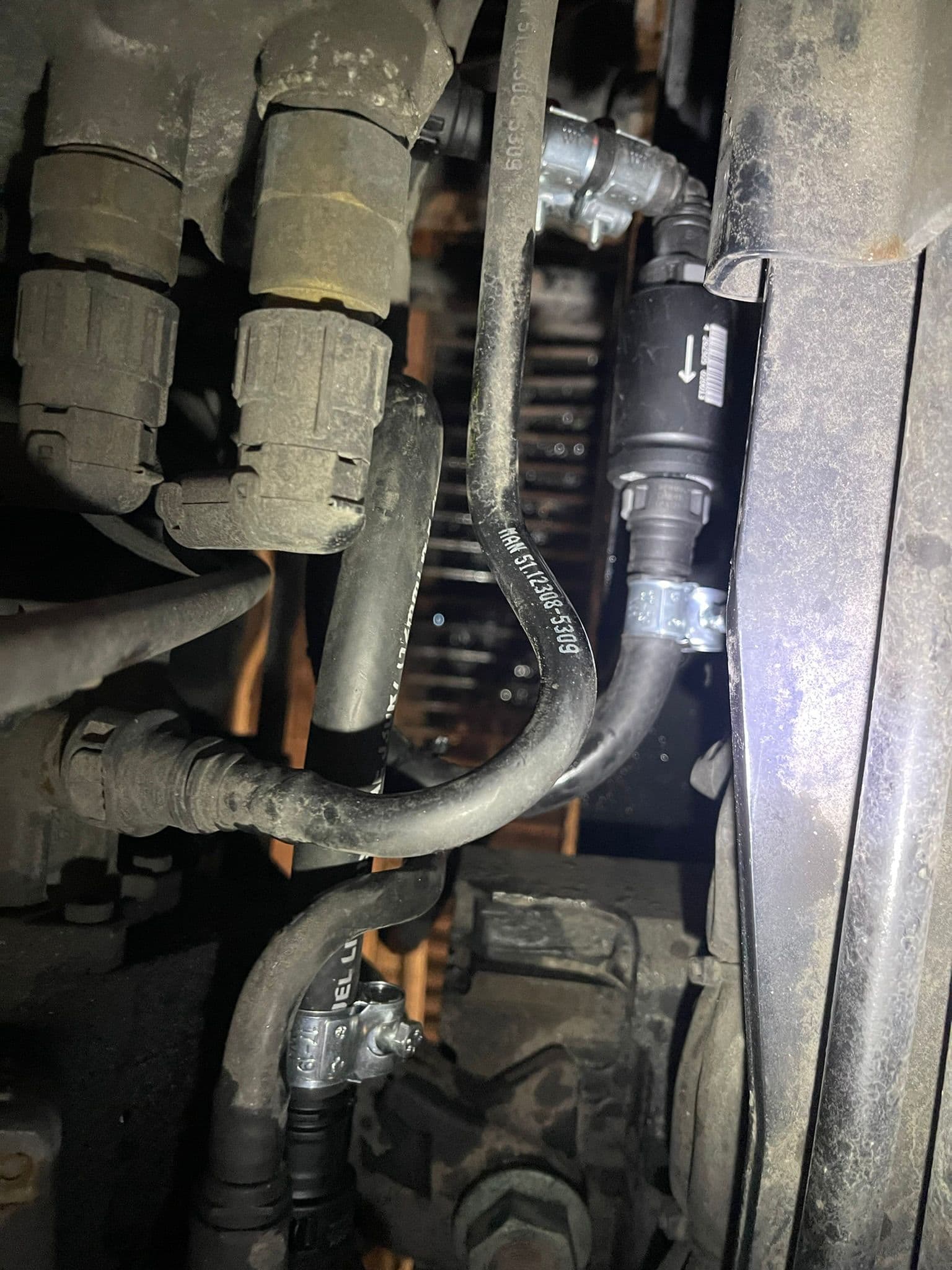
FET fits on the fuel line between the fuel pump and the fuel filter, outside the high-pressure system, with no modification to the engine or factory-set components. Fitting takes under an hour. Devices are sized for engines from small cars to heavy goods vehicles, and carry a 12-month warranty against manufacturing defects.
The full report is available on request, along with the other documents listed on our certifications page. If you run a fleet, book a free fuel assessment and we will show you what the numbers look like for your own vehicles.